Markets
China support for Europe bolsters markets
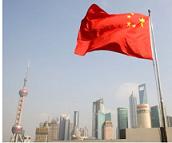 Equity markets rose Thursday in Europe and Asia after the Chinese authorities said Europe would remain one of their most important markets for investment.
The People's Bank of China issued a statement dismissing as "groundless" reports in the foreign press that the State Administration of Foreign Exchange, which is responsible for assets of more than $600 billion, was evaluating its investment in euro-zone debt amid concerns that peripheral members of the currency bloc might eventually default on their debts.
The central bank did not specify the reports to which it was referring, but The Financial Times reported Thursday that officials in Beijing had been meeting recently with foreign bankers to discuss the matter.
In its statement, the central bank said it was committed to long-term investment in Europe. It also said it supported the E.U. integration process and the European stabilization measures worked out this month by the European Union and the International Monetary Fund, and that the euro zone would be able to overcome its difficulties.
While the official support from Beijing helped to lift the euro and stocks, it also served as a reminder that global confidence in Europe’s ability to solve its problems remains fragile. Investors were looking to Berlin, where the U.S. Treasury secretary, Timothy F. Geithner, was due to hold a press conference later Thursday with Wolfgang Schäuble, his German counterpart.
In early trading, the Euro Stoxx 50 index, a barometer of euro zone blue chips, gained 0.4 percent, while the FTSE 100 index in London rose 1 percent. All major sectors advanced, led by shares of basic materials and industrial companies.
BP, the company behind the oil spill disaster in the Gulf of Mexico, rose 1.8 percent amid optimism that the company's efforts to cap the well would succeed. BP, formerly known as British Petroleum, has lost nearly one-fourth of its market value since the accident last month.
Trading in U.S. index futures suggested Wall Street stocks would open with a strong upward move. On Wednesday, the Dow Jones industrial average fell 69.30 points, or 0.7 percent, to 9,974.45. U.S. stocks had initially risen Wednesday, only for the Dow Jones industrial index to close below 10,000 points for the first time since February.
Asian shares rose. The Tokyo benchmark Nikkei 225 stock average added 1.2 percent, while the main Sydney market index, the S&P/ASX 200, rose 1.7 percent. In Hong Kong, the Hang Seng index was up 1.4 percent in late trading, and in Shanghai the composite index rose 1.2 percent.
The dollar was mixed against other major currencies. The euro rose to $1.2279 from $1.2178 late Wednesday in New York, while the British pound rose to $1.4483 from $1.4387. The dollar rose to 90.34 yen from 89.92 yen
U.S. crude oil futures for July delivery rose 82 cents to $72.34 a barrel. Comex gold fell $2.10 to $1,213.20 an ounce.
Investors were focused for a change on hopes that the global economic recovery will not be derailed by Europe's debt problems. But overall, the ups and downs — after volatile trading all week — reflected how jittery sentiment remains and echoed the performance on Wall Street.
For weeks, global markets have been volatile and nervous, with only occasional short-lived bounces interrupting a generally downward trend. The reasons for the slide — concern about the wider fallout from the European debt crisis and worries about China's efforts to control of the pace of its booming growth — are likely to keep dogging financial markets.
Beat Lenherr, chief global strategist at LGT Capital Management in Singapore, said there was now hope that global policy makers will take a more coordinated approach to stimulating growth and that governments and central banks in Asia will ease off their efforts to rein in inflation and rapid growth in a bid to cushion their economies from the expected slowdown in Europe.
Several Asian central banks have begun to raise interest rates again in recent months as the region's recovery picked up speed.
"If we want to see a sustained recovery in the markets and in economic growth, we would have to see China and others take their foot off the brake and allow domestic consumption to boom — which would be positive for Europe too," Mr. Lenherr said, adding there was good reason to think that this might happen.
"In the short term, we are seeing some confidence," Mr. Lenherr said. "But in the longer term, we are neutral: We see no reason to panic outright, but we see no reason to be elated either."
"The markets now need a clear signal, a coordinated international confidence building message," he said. "Anything uncoordinated risks being counterproductive and could undermine confidence yet again."
(Published by The New York Times – May 27, 2010)