Health
EU proposes compensation package for farmers hit by E. coli outbreak
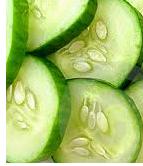 The European agriculture commissioner has proposed a 150m euro compensation fund for farmer hit by the E. coli outbreak. While farm ministers meet in Brussels, the search goes on for the source of the outbreak.
The European Union has proposed the creation of a 150m euro ($219m) fund to compensate farmers affected by a deadly E. coli. outbreak.
"We are proposing to launch it at 150m euros. Then we will see the [compensation] requests we get," European Agriculture Commissioner Dacian Ciolos said as he arrived at a meeting of agriculture ministers in Luxembourg. The proposal was to be discussed during the emergency talks, which were called to discuss how to respond to the E. coli outbreak in northern Germany.
European fruit and vegetable producers have seen their sales hit hard by the outbreak, and by false alarms raised as to the possible origin of the deadly bacteria.
Spain, whose cucumbers were highlighted as the source last week, has called for a revision of the European food safety alert system - one likely outcome of Tuesday's talks.
"In future we need to see how the timing of the alerts can be closer to the actual scientific basis and proof," said European Health Commissioner John Dalli. "Something that goes through the rapid alert system is news very quickly."
Cucumber scare
Spanish cucumbers were the second possible cause of the outbreak brought to the public's attention in Germany, after a more general warning covering tomatoes, raw vegetables and green salad ingredients from Lower Saxony. Although a different strain of E. coli was identified in tests on Spanish cucumbers, it turned out to be unconnected to the roughly 2,000 cases originating in northern Germany.
Spain's fruit and vegetable exporters association, FEPEX, estimated on Monday that the industry was losing 225m euros ($330m) per week as a result of the warning, with producers saying prices were down 35% since May 27.
"We have told Germany that it must reimburse us for the loss. If it covers 100%, which is what we are demanding, the affair will be closed. Otherwise, we reserve the right [to take] legal action," Spanish Agriculture Minister Rosa Aguilar said on Spanish public television.
Searching for the source
The most recent produce labeled as a possible source of the bacteria are organic bean sprouts produced at a market garden south of Hamburg. German officials said Sunday that there were strong links to all the major concentrations of E. coli cases, and that one employee at the farm had contracted the illness. However, the first 23 of 40 laboratory tests have come up negative.
"This is an important lead that we are vigorously pursuing," Agriculture Minister Ilse Aigner reiterated after the first negative results came in. The conservative politician said the government still advised people in the affected region to avoid bean sprouts, cucumbers, tomatoes and salad as a precaution.
Under criticism
The German government has come under criticism from the public and the opposition Green party for responding poorly to the spread of the bacteria, which has contributed to the death of 22 people.
"Our crisis management system is working, the authorities are concentrating all their resources on battling this epidemic," Aigner said in the government's defense in an interview published in Tuesday's edition of the Saarbrücker Zeitung newspaper.
EU Health Commissioner Dalli also announced in the run-up to Tuesday's meeting that European food safety experts had been sent to Germany to help local authorities pinpoint the source of the outbreak.
"This is an important crisis … something that although contained geographically is an issue that needs to be controlled, and we need also to ensure that it does not occur again," said Dalli.
(Published by DW-World - June 7, 2011)