Madoff Jailed Following Guilty Plea in Largest Ponzi Scheme
 Bernard Madoff, a symbol of investor distrust in a global recession, was jailed after admitting he masterminded the largest Ponzi scheme in history, an epic swindle that may have reached $65 billion.
Madoff, 70, faces a prison term of as long as 150 years when he is sentenced June 16. He entered his guilty plea yesterday in Manhattan federal court, three months after confessing to his sons that Bernard L. Madoff Investment Securities LLC was "one big lie." U.S. District Judge Denny Chin ordered the immediate jailing of Madoff, who had been free on $10 million bond.
"I operated a Ponzi scheme through the investment advisory side of my business," Madoff told Chin at yesterday’s hearing in a courtroom packed with victims and members of the media. Speaking for the first time since his arrest on Dec. 11, he said he was "deeply sorry" and knew what he did was criminal.
The money manager told Chin that, in the early 1990s, with the U.S. in a recession, he felt "compelled" to provide the returns his investors expected. He said the proprietary trading and market-making units of his business, both run by his sons, were "legitimate," and his U.K.-based affiliate, Madoff Securities International Ltd. was an "honestly run" business.
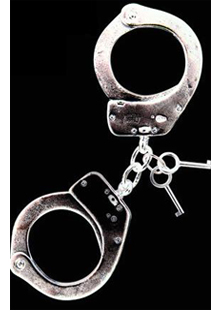
Madoff, wearing a charcoal gray suit and gray tie, showed no emotion as he put his arms behind his back and federal marshals snapped chrome handcuffs onto his wrists. They led him to a holding cell adjacent to the courtroom. Madoff will be placed in the maximum security Metropolitan Correctional Center next door to the courthouse.
"Mr. Madoff, I will see you at sentencing,"Chin said.
Planned Appeal
Defense lawyer Ira Sorkin filed a notice that he would appeal the jailing of Madoff before his sentencing.
Madoff’s sons, who didn’t attend the hearing, haven’t been accused of any wrongdoing. Their father, who declined to accept a plea deal that people familiar with the case said would have included a conspiracy charge, isn’t required to disclose any information on the fraud or who may have assisted him.
Madoff’s plea of guilty -- he repeated the word 11 times as Chin read each charge -- marks the downfall of an acclaimed investment adviser who told the world his fortune came through a firm that specialized in making markets, trading securities and advising wealthy clients.
Over three decades, Madoff built a reputation as a brilliant stock picker who delivered steady returns through both bull and bear markets, attracting an international client roster that included celebrities including filmmaker Steven Spielberg, fund managers such as J. Ezra Merkin, charities, universities, friends and even European royalty.
Thousands of Investors
Some of his thousands of investors lost their life savings. Thierry Magon de La Villehuchet, chief executive officer of Access International Advisors, which managed $3 billion, was driven to suicide because of his firm’s Madoff-related losses, his brother, Bertrand Magon de la Villehuchet, said in January.
"I am actually grateful for this opportunity to publicly speak about my crimes, for which I am so deeply sorry and ashamed," Madoff said in court. "I knew what I was doing was wrong, indeed criminal."
The U.S. Securities and Exchange Commission, whose chief , Mary Schapiro, pledged after her appointment in January to beef up staff and expedite enforcement cases, has come under scrutiny as a result of the scandal. Harry Markopolos, a former money manager, told Congress that he tried to convince the agency for nine years that Madoff was a fraud, and that most agency officials he dealt with suffered from "investigative ineptitude."
The Case Continues
The case doesn’t end with Madoff’s plea. Investigators have seized control of his offices at the lipstick-shaped building at 885 Third Avenue in Manhattan, where Madoff Securities operated out of three floors. Prosecutors say his subordinates helped him swindle investors. A central issue for investigators is whether employees knew of the fraud. No one else has been charged.
"He is attempting to fall on his sword," said George Jackson, a former federal prosecutor who is now at Bryan Cave in Chicago. "His concern is not with himself. He’s trying to protect those around him who may have been criminally culpable, who worked in concert with him. He claims he operated alone, but that flies in the face of common sense."
Plea deals often include leniency or another consideration in exchange for cooperation. By rejecting a deal, Madoff was forced to admit to all 11 counts. If he had pleaded guilty to conspiracy, he may have been required to disclose any co- conspirators who may have helped him in the fraud.
"The government’s investigation continues," Assistant U.S. Attorney Marc Litt said in court. "A lot of resources and effort are being expended both to find assets and to find anyone else who may be responsible for this fraud."
Hunting for Assets
Prosecutors are hunting for Madoff’s assets, as they seek forfeiture of the $170 billion they said moved through his firm since the fraud began in the 1980s. The firm’s bankruptcy trustee has found about $1 billion in cash and securities.
Madoff told 4,800 investors in November that their accounts held $64.8 billion, though their holdings were a "small fraction" of that, prosecutors said in court papers. Sorkin said it’s unclear how much investors lost.
Madoff pleaded guilty to securities fraud, mail fraud, wire fraud, investment adviser fraud, three counts of money laundering, false statements, perjury, false filings with the SEC and theft from an employee benefit plan.
His scheme unraveled in early December amid a rush of investor redemptions, the government said. He told his sons Mark, who ran Madoff’s proprietary trading business, and Andrew, who was a director of the unit, that he wanted to pay bonuses that month, two months earlier than usual, according to prosecutors.
'One Big Lie'
There was "absolutely nothing," and the business was "all just one big lie," Madoff told his relatives, according to an affidavit filed in court on Dec. 11 by Federal Bureau of Investigation Agent Theodore Cacioppi.
The sons turned their father in to federal authorities, Sorkin said in court yesterday.
Madoff was arrested for using billions of dollars from his new investors to pay off old ones. Dogged by news cameras as he traveled to and from court, he was allowed to remain free on bail. He was ordered to remain in his multimillion-dollar apartment on Manhattan’s Upper East Side, under electronic and video surveillance while watched by security guards.
Madoff promised some investors returns of as much as 46 percent and "created a broad infrastructure" to give the appearance of "a legitimate investment advisory business," according to the written charges to which he pleaded guilty. His "back-office" staff had little or no experience and at Madoff’s direction misled clients about investments, the government said.
Early 1990s
In court yesterday, Madoff said that "to the best of my recollection," the scheme began in the early 1990s amid a recession and market decline. Prosecutors said the crime began a decade earlier.
"While I never promised a specific rate of return to my clients, I felt compelled to satisfy my clients’ expectations at any cost," Madoff told Chin.
Madoff said he "never invested" funds in securities as he had promised clients. Instead, he deposited their money in an account at Chase Manhattan Bank and withdrew funds for customer redemptions.
"I believed it would end shortly, and I would be able to extricate myself," he said of his fraud. "As the years went by, I realized that my arrest and this day would inevitably come. I am painfully aware I deeply hurt many, many people."
Covering Tracks
Madoff said that, to cover his tracks, he told clients that he used a "split strike conversion" investment strategy. He said he told them he put money in a basket of stocks that mimicked the price movements of the Standard & Poor’s 100 Index, invested intermittently in government-issued securities, and bought and sold stock option contracts as a hedge.
"Those representations were false for many years," Madoff said. "I never made those investments."
Madoff said he lied to clients and employees about trades he claimed occurred in overseas markets. He said he gave false testimony to the SEC in 2006, sent bogus trade confirmations to clients, filed false documents with regulators, and moved funds between his London and New York operations so it would appear as if he were actively trading.
Madoff said that, in later years, he charged advisory clients 4 cents a share and used the revenue for his other business units. He said salaries and bonuses of employees in the market-making and proprietary trading divisions were funded by what he said were legitimately earned revenue.
"His firm would have been unable to operate but for the cash generated from this Ponzi scheme," Litt said. "Madoff also used some of the money funneled through London to support his lavish lifestyle."
Manhattan Prison
The money manager is being sent to the 12-story Manhattan prison, federal marshals said. Later he may be assigned to one of several U.S. facilities in the New York area, including the Federal Correctional Institution in Otisville, New York.
Madoff is joining a corps of aging white-collar convicts including former WorldCom Inc. Chief Executive Officer Bernard Ebbers, 67, now housed at the Federal Correctional Institution in Oakdale, Louisiana, and John Rigas, 84, the ex-CEO of Adelphia Communications Corp. who is imprisoned at the Federal Correctional Institution in Butner, North Carolina.
Wife's Assets
Last week, a different judge said in court papers in a related lawsuit by the SEC that Madoff’s lawyers claim Madoff’s wife, Ruth, is the sole owner of the couple’s Manhattan apartment, $45 million in bonds and $17 million in cash. These assets are "unrelated" to Bernard Madoff’s alleged fraud scheme, his attorneys said, according to the judge.
It may ultimately be left to Chin to decide whether Ruth Madoff may keep the assets. She hasn’t been charged with a crime.
As for Madoff’s appeal of his incarceration before sentencing, Jackson said the money manager’s chances of success are "slim to none."
"The law requires the judge shall incarcerate following conviction unless there’s clear or convincing evidence that he’s not a flight risk or a danger to the community," Jackson said.
The case is U.S. v. Madoff, 09-cr-00213, U.S. District Court for the Southern District of New York (Manhattan).
(Published by Bloomberg - March 13, 2009)