Political Dialogues
EU ties to Latin America require revamping, analysts say
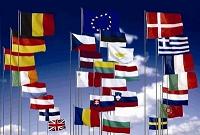 Spain is hosting a series of political dialogues between European Union, Latin American and Caribbean nations this week. But analysts doubt they will suffice to move relations forward significantly.
The EU Spanish presidency hosting the biannual summit between the European Union, Latin America and the Caribbean said it is focusing on "building momentum" in strategic ties between the two regions.
"We have high hopes for this summit," said Diego Lopez Garrido, the Spanish Secretary of State for the EU, at the Euro-Latin American Parliamentary Assembly which opened in Seville on Thursday.
After all, there is need for improvement in the two regions' relations, said Anna Ayuso, a research fellow at the Barcelona Center for International Affairs.
"The relationship is not the best at the moment," Ayuso told Deutsche Welle. Europe, of course, was very occupied with its own problems as a result of the economic crisis, she said. But she added that Latin America has never been a priority for the EU, despite official declarations stating otherwise. "Now, it's even less so."
The EU has called its relations with Latin America "a strategic partnership" since the first bi-regional summit was held in Rio de Janeiro, Brazil in 1999. Today, the EU is Latin America's second largest trading partner and the biggest investor in the region. But there has been little progress in developing deeper ties, according to Celestino del Arenal, Professor of International Relations at Complutense University of Madrid.
"Ten years after it was announced, the ambitious goal of a bi-regional strategic partnership that was presented at the first summit in Rio de Janeiro remains unfulfilled," said del Arenal in a paper for Madrid's Elcano Royal Institute.
Lack of a common voice
One major hurdle, analysts said, is the lack of a common Latin American policy.
"Neither the countries of Latin America as a whole, or as subregional groups, have managed to act with a single voice," del Arenal said. "The national interests of individual countries in the region have always taken precedence over any shared goal."
It is also difficult in turn for some Latin American leaders to fully comprehend the EU's position and ability to speak as one, said Joaquin Roy, director of the European Union Center at the University of Miami.
"The Latin American countries do not understand the concept of common sovereignty, that you can be at the same time a state and a member of the European Union," Roy told Deutsche Welle.
Another problem was the overwhelming power of the presidents there, he said. Latin America's largely homogeneous political structures from the 1990s have changed, with populist and neo-populist leaders in power, such as Hugo Chavez in Venezuela.
"All is decided by whoever is in power," said Roy, who has acted as a consultant to the EU for deals in the Caribbean and Central America several times. "None of those leaders are willing to share power with their neighbors."
According to Ayuso, these political structures make it more difficult on the European side to meet counterparts on an equal footing.
"It's easier to speak with Mexico or Brazil than it is with Chavez in Venezuela," she said. The political structures in turn also have economic implications, del Arenal said.
"These trigger legal insecurity for investments, and strongly discourage EU interest in some countries and, in an indirect way, in the whole region," he said.
Trade cannot be neglected
The Spanish EU presidency this week stressed that the two regions were "partners in tackling global challenges." Many Latin American countries are in fact playing major roles on the international stage, such as Brazil. Climate change and security issues, for example, are significant topics of discussion between the two sides.
But economic progress on a subregional and bilateral level must also move forward, for example in trade negotiations with the Mercosur countries Argentina, Brazil, Paraguay and Uruguay. The EU began free trade negotiations with Mercosur in 1995. But these were suspended without agreement in 2004 due to disputes on a number of issues, such as agriculture and intellectual property rights.
Earlier this month, the European Commission proposed to relaunch the negotiations. This would result in "clear economic benefits" for both sides, the Commission said.
Less is more
Spain calls itself the "natural bridge" between the EU and Latin America due to its historical ties there. It has actively promoted the relationship to the region ever since it joined the EU. As host of the summit, it hopes to convince other EU members of Latin America's significance.
Several regional meetings are taking place, for example with Mexico, Chile and Mercosur. This may be helpful for the final declaration expected after the leaders of all the countries come together on May 18. By first focusing on ties of a smaller scale, more could be achieved, Ayuso said. In addition, the final declaration is supposed to be shorter than it was at the last summit in Lima, Peru in 2008 and include more concrete proposals.
"This is a good start because the other declarations were very long," Ayuso said. Having topic-related dialogues, such as on migration and security, also contributed to the potential of the summit.
"Focusing makes this dialogue more effective, by creating concrete objectives," she said.
Still, Roy said, the summit is not expected to result in a dramatic change.
"I have to be optimistic," he said. "There's going to be progress, but it's going to be very slow."
(Published by Deutsche Welle – May 16, 2010)