Real
Brazil's 'exhausted' real is poised to drop: technical analysis
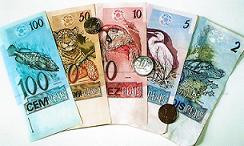 Brazil's real is poised to drop to the weakest level in 10 months after buyers of the currency diminished and a momentum indicator signaled declines, according to Invesco Ltd.'s Avi Hooper.
The currency's weekly TD Sequential indicator suggests an almost yearlong rally against the dollar ended in October, while the moving average convergence/divergence, or MACD, chart shows the real is likely to weaken, Hooper said in an interview. A close above the currency's 55-week moving average tomorrow would signal a move to the 200-week moving average of about 1.939 per dollar, or 5.7 percent weaker than yesterday's level of 1.828, according to Hooper.
"Buyers are exhausted," said Hooper, a money manager in London at Invesco Asset Management Ltd., part of Invesco, an investment firm that oversaw about $420 billion worldwide at the end of March. "This chart pattern suggests now is the time to be short the Brazilian real and long the U.S. dollar. A new trend has started and it’s strongly bearish."
The real retreated 1.6 percent against the dollar this week through yesterday on concern Europe’s debt crisis will curb the global economic recovery and reduce demand for higher-yielding assets. The currency is paring an 11 percent rally in the past 12 months driven by rebounds in Brazilian and global economic growth that boosted demand for the nation's stocks and bonds.
"The real has been a pretty crowded trade and what's happening is a lot of these long-term crowded positions are getting sold," said Hooper. "The setups are all there for this move weaker."
In technical analysis, investors study charts of trading patterns to forecast changes in a currency, commodity, security or index. The TD Sequential, developed by Tom DeMark of Market Studies LLC, seeks to anticipate reversals in the trend of price movements. MACD charts can indicate whether a price shift is a change in trend or a short-term deviation. Moving averages show the average value of a price over a specified period of time.
(Published by Bloomberg – May 20, 2010)