Jackson trial
Jackson trial likely to be televised
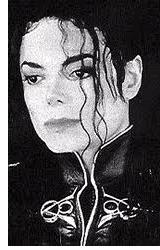 Michael Jackson's doctor has pleaded not guilty to manslaughter - paving the way for a televised trial.
"Your honour, I am an innocent man," Dr Conrad Murray told Superior Court judge Michael Pastor in a soft voice. "I definitely plead not guilty."
Lawyers for Murray, who is accused of giving Jackson a lethal dose of the powerful anaesthetic propofol and other sedatives, said they would be ready for trial within the 60-day statutory time limit, which would make for an unusually speedy trial.
The judge scheduled the trial to begin on March 28 and set a pre-trial hearing for February 7.
"Dr Murray is looking forward to finally telling his side of the story," defence attorney Ed Chernoff said outside court.
Asked why the defence wanted to begin the trial so quickly, Chernoff said: "Dr Murray has been waiting 22 months for his opportunity to do this."
Judge Pastor said he was inclined to allow TV coverage of the trial.
District attorney's spokeswoman Sandi Gibbons said outside court her office had a policy of not opposing cameras in court.
Cameras were allowed at the hearing yesterday for the first time, marking a shift in Judge Pastor's previous ban.
One of Murray's lawyers said earlier he would not seek a plea bargain and the defence had no qualms about going to trial, despite strong prosecution evidence at a preliminary hearing aiming to prove the doctor's gross negligence killed Jackson.
Ms Gibbons declined to comment on whether a plea bargain was discussed, saying it would be unethical to address such a matter. Lawyers unconnected to the case said Murray would be well advised to plea-bargain.
Judge Pastor suspended Murray's licence to practise in California pending the trial.
Legal experts said several defences were available to Murray. Among them was the suggestion by his lawyers that Jackson, desperate for sleep, self-administered a fatal dose of propofol while Murray was out of the room.
That would mean Jackson either injected propofol into an IV line or swallowed the drug, which is meant to be administered intravenously during surgery. The prosecution was likely to challenge that scenario.
Mr Chernoff said the defence had not yet decided if Murray would testify in his defence.
If convicted, Murray could face a maximum of four years in jail.
In a six-day preliminary hearing, a portrait emerged of a doctor trying to help his famous client overcome debilitating insomnia with propofol, which was not intended for home use.
Jackson had used it before and demanded it, calling it his "milk".
A coroner testified that Jackson, 50, died of a propofol overdose in combination with other drugs on June 25, 2009. His death was classified as a homicide.
Murray's behaviour before and after Jackson stopped breathing was detailed by household staff and paramedics. This was backed up with phone records, emails and, most importantly, a transcript of Murray's nearly three-hour interview with police.
Murray said he gave Jackson a low dose of propofol after he spent 10 hours trying to get him to sleep using other drugs.
When the star appeared to doze off, Murray said he left the room for two minutes to go to the bathroom then returned to find Jackson not breathing. He delayed calling an ambulance for 25 minutes to an hour while he tried to revive him, testimony showed.
(Published by Adelaide Now - January 27, 2011)