Supreme Court rules in favor of car passengers
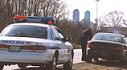 The Supreme Court ruled unanimously today that a passenger in a vehicle has the same right as a driver to challenge the constitutionality of a traffic stop.The court decided that when police stop a vehicle, passengers are "seized" within the meaning of the Fourth Amendment and -- like drivers -- can dispute the legality of a search.
The ruling overturned a California Supreme Court decision in the case of Bruce Edward Brendlin, who was arrested on parole violation and drug charges after a November 2001 traffic stop in Yuba City, Calif. Brendlin, who subsequently was sentenced to four years in prison, appealed his conviction on the grounds that the drug evidence should have been suppressed because the traffic stop amounted to "an unlawful seizure of his person," according to today's ruling.
Although the state acknowledged that police "had no adequate justification" to stop the car, in which Brendlin was a passenger in the front seat, it argued that he was not "seized" and thus could not challenge the government's action under the Fourth Amendment's search and seizure protections. Government lawyers also argued that Brendlin could not claim that the evidence against him was tainted by an unconstitutional stop, according to the ruling.
The California Supreme Court sided with the state in the case, known as Brendlin v. California, reasoning that Brendlin was not seized because the car's driver was the exclusive target of the traffic stop and that a passenger "would feel free to depart or otherwise to conduct his or her affairs as though the police were not present."
The Supreme Court, however, rejected that argument today on grounds that a "reasonable passenger" would not feel free to simply leave the scene of a traffic stop.
Writing for a unanimous court, Justice David H. Souter ruled that "a traffic stop necessarily curtails the travel a passenger has chosen just as much as it halts the driver. . . ." He said a "a sensible person would not expect a police officer to allow people to come and go freely" from the scene of a stop.
The court found that "Brendlin was seized from the moment [the driver's] car came to a halt on the side of the road, and it was error to deny his suppression motion on the ground that seizure occurred only at the formal arrest."
(Published by The Washington Post, June 18, 2007)