Crumbs
Crumbs . . . biscuit mistake may cost taxman millions
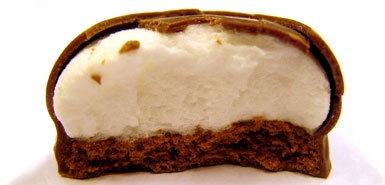 Any child can tell a chocolate teacake from a chocolate biscuit, but tax officials who failed to spot the difference may have landed the Treasury with a £3.5 million bill.
In what was a crucial and potentially costly error, tax officials had insisted that a Marks & Spencer chocolate teacake was really a biscuit. Chocolate biscuits are subject to standard-rate VAT, whereas chocolate cakes are zero-rated.
Twenty years later, Customs and Excise acknowledged the mistake and said that teacakes were really chocolate cakes after all.
By the time the error was corrected, M&S had handed over £3.5 million in wrongly paid VAT on its teacake sales and demanded the money back. But the Commissioners of Customs and Excise offered only £350,000 on the grounds that 90 per cent of the VAT had been passed on to M&S customers: paying back the total sum would therefore mean “unjust enrichment” for the store chain. In addition, the commissioners invoked a three-year limit on claims for repayment – and ended up handing back only £88,440. Since then a separate court case has rejected such time limits as a breach of EU law, but Customs still refused to refund more than 10 per cent of the overpaid VAT.
Twelve years after M&S applied for its VAT back, Juliane Kokott, Advocate-General of the European Court of Justice, said that traders were entitled to the correct application of national VAT rules, and had a right to a refund of any VAT wrongly charged.
Yesterday’s legal “opinion” will now be considered by the full European Court of Justice before a final verdict is announced early next year. If the judges agree with the Advocate-Gener-al, which they do in about 80 per cent of cases, Revenue & Customs, as the organisation responsible is now called, will have to refund the full amount of £3.5 million.
VAT was introduced in 1973. “Chocolate-covered products” were all classed as biscuits and not as cakes – even chocolate teacakes. It was not until September 1994 that Customs acknowledged the error, despite another European case that had already ruled that Jaffa Cakes were cakes and not, as they had been classified, biscuits.
In 1995 M&S sought its VAT money back and went to the Court of Appeal when it was offered a fraction of the sum. The Court of Appeal backed Customs, so M&S went to the House of Lords, which asked the Court of Justice for a verdict on whether traders could seek complete refunds of “unduly paid” VAT.
The Advocate-General said that EU rules did not in principle prevent Customs from holding back repayments if a full refund would mean “unjust enrichment” for a trader. But because this clause was applied differently to traders owing the Treasury money than to people owed money – contrary to EU rules on equal treatment – it could not be invoked in the case of M&S.
The inequality has since been removed but was in force at the time of the teacake saga.
The Advocate-General said yesterday: “In general, the supply of food is zero-rated for VAT in the UK. Confectionery is an exception to such favourable tax treatment.
“There is an exception to that exception for cakes and biscuits, which are subject to the zero rate of tax applying to food. Biscuits wholly or partly covered with chocolate, however, are regarded as confectionery and taxed accordingly at the full rate.”
Best served with tea
—Although M&S teacakes have a chocolate covering and a creamy marshmallow filling, the traditional British teacake is usually a light, sweet, bun containing dried fruits such as currants or sultanas
—Last year, Bristol councillors were so fed up with the city’s seagull population that they gave up biscuits at meetings and spent the £25,000 on tackling the problem
—In Kent, the teacake is known as a “huffkin”, which is often flavoured with hops, especially at the time of harvesting hops in September
—Scientists from the University of Bristol developed a formula to perfect the art of dunking. After two months, the team calculated that up to 10 times more flavour is released by dunking than if the biscuit is dry
—The researchers designed a prototype dunking holder to help the less dextrous with their technique
—Nine out of ten people in a poll of 7,000 recently named the custard cream as their favourite biscuit
—The Biscuit Appreciation Society has a membership of about 3,000,000. The society’s website admits that the number who have joined up far exceeds its initial expectations by about 2,999,998
(Published by Times Online, December 14, 2007)
_____________________