Airline Industry
Airline industry heads for slowdown, experts say
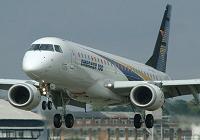 Growth in the airline industry could be headed for a severe slowdown as record-high fuel prices and other factors curb demand, some aviation industry insiders warn.
Passenger demand is expected to suffer as airlines look to pass on their increased fuel costs and companies cut back on business travel due to weaker economic conditions amid the global credit crunch. Rising concerns about the impact that aviation is having on climate change could limit travel, along with passenger security-screening delays and capacity constraints at airports and on navigation networks.
Alexander ter Kuile, secretary general of the Civil Air Navigation Services Organization, said that it's not inconceivable that aviation growth could even grind to halt due to these pressures. "I see significant threats to the industry (even) without regulatory intervention," he said at an aviation conference on the environment in Geneva. Canso represents air traffic service providers around the world.
That contrast with the outlooks of many airlines, which are a bit more optimistic.
The International Air Transport Association, which represents about 240 of the world's full-service carriers, estimates that growth in international passenger traffic may slow to about 5% in 2008 from 7.4% in 2007. High oil prices and the weaker economic conditions are likely to hit demand, IATA says. Passenger traffic is measured in revenue passenger kilometers, or RPKs, which factor in how far passengers are flown.
Airplane maker Airbus predicts that air passenger traffic growth is set to average 4.9% annually between 2007 and 2026. Airbus is part of European Aeronautic Defence & Space Co. NV (5730.FR).
Given the sharp rise in crude oil prices over the past year, jet fuel now represents about 25% to 30% of an airline's operating costs on average. Some small carriers have gone out of business in recent weeks while analysts are warning that passing on rising fuel costs to customers through higher ticket prices will get tougher.
Nymex light, sweet crude futures Tuesday hit a record high of $119.90 a barrel, up 82% over the past 12 months.
Fuel costs have put big dents in airlines' earnings. U.S. carriers Delta Air Lines Inc. (DAL) and Northwest Airlines Corp. (NWA) Wednesday blamed higher fuel prices in taking a combined $10 billion write-down in the first quarter.
Both companies also joined their peers in announcing new capacity cutbacks and plans to mothball aircraft. Delta proposes to buy Northwest in an all-stock deal that was initially valued at $3 billion.
In Europe, airlines such as British Airways PLC (BAIRY BAY.LN) have already seen their short-haul business class traffic hit as some companies trim back on travel or force staff to travel economy class.
Mary McMillan, director of environment and energy programs at the U.S. Air Line Pilots' Association, said sky-high fuel costs could be seriously damaging. "Yes, demand is up (now) but I can ask how long that will last given the price of oil today," she said.
McMillan, who is also a Boeing Co. (BA) 767 pilot for UAL Corp. (UAUA) unit United Airlines, said heavily congested parts of the air-traffic-control network in the U.S. are restricting growth. Referring to last summer's delays at many major U.S. airports, she said: "The system is already over-stretched."
(Published by CNN News 23, 2008)