Overcharged
U.K. consumers overcharged by $2.7 billion on PPI
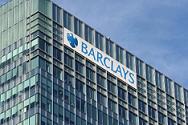 Barclays Plc, Lloyds TSB Group Plc and other U.K. banks and retailers overcharge by as much as 1.4 billion pounds ($2.7 billion) a year on payment-protection insurance because consumers aren't advised they can choose other providers, a U.K. antitrust regulator said today.
Borrowers are pressured to buy the insurance with loans and aren't told about competitors' rates, the Competition Commission said in provisional findings of an investigation into so-called PPI, used to cover payments in case of illness or unemployment. The regulator may consider price caps or a ban on selling PPI at the same time customers get mortgages or credit cards.
“The commission's proposed remedies could destroy this market, particularly while we are facing a period of economic uncertainty,” the Association of British Insurers, a trade association of 400 members, said today.
The 14 million U.K. PPI policies generate annual revenue of 5.5 billion pounds, and 90 percent are sold to protect personal loans, mortgages and credit cards, the London-based commission said. PPI has come under scrutiny from other regulators with the U.K.'s Financial Services Authority fining HSBC Holdings Plc's HFC Bank unit 1.1 million pounds for inappropriate sales advice.
The agency's investigation found that it's expensive for customers to change PPI providers and difficult for them to compare rates because the product is often bundled with a loan. Providers don't bother to advertise much, or compete with for customers, the commission said.
‘Serious Problems'
In addition to a potential price cap and sales ban, measures being considered by the commission include requiring monthly premiums rather than a one-time payment, standardized information that providers must give on advertisements and at the point of sale, annual statements of how much PPI costs.
“These remedies look more qualitative than quantitative,” said James Hutson, an analyst at Keefe Bruyette & Woods Ltd. in London. “Even if price caps were utilized, this would be offset by an increase in the pricing of the core product.”
Today's report focused on PPI providers, led by Lloyds TSB, Barclays and HBOS rather than PPI underwriters. There was no evidence of deliberate price fixing in the PPI market, the commission said.
Lloyds TSB and HBOS didn't immediately return calls for comment. Barclays spokeswoman Elizabeth Holloway said the bank was "optimistic'' that its PPI products offered consumers a good deal.
“We've found serious problems with the PPI market and customers are paying for the lack of competition,” said Peter Davis, the commission's deputy chairman who led the inquiry. “The way PPI is sold as an `add-on' to a loan or other credit product means distributors escape the pressure they should face from competing suppliers.”
Overdraft Probe
The provisional findings come a month after another antitrust regulator, the Office of Fair Trading, was given the go-ahead by a London court to investigate overdraft charges at U.K banks.
“The commission has taken a very hard approach and its remedies are completely unworkable,” said Mike Pullen, head of antitrust and trade at DLA Piper LLP, who advises a PPI provider. “The banks will have to make up their bottom line somehow.”
As many as 2 million customers have been improperly sold PPI, consumer-advocacy group Which? Ltd. said last month. Customers may not be informed that the insurance, which is often sold as a lump sum, is added to the cost of the loan on which they pay interest, the group said.
The consumer group said it was “vindicated” by today's findings and called on an outright scrapping of PPI.
The OFT first referred the PPI market to the Competition Commission in February 2007. The OFT found that only 20 percent of the money collected in premiums is ever paid out in claims. The commission looked at data from 2002 to 2006.
The banks and other PPI providers can respond to the commission before it publishes its final report and remedies.
(Published by Bloomberg - june 5, 2008)