Sanctions
Bush: US eying Zimbabwe sanctions President
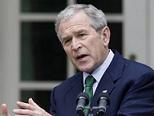 Bush said Tuesday that the United States is looking at ways to punish Zimbabwean leaders after China and Russia blocked sanctions at the United Nations last week.
Bush said that he was "displeased" with China's and Russia's actions and added that the State and Treasury departments "are now working on potential U.S. action."
The U.S. wants to punish Zimbabwean President Robert Mugabe's authoritarian government for a widely discredited presidential election. Mugabe claimed victory in a June 27 presidential runoff in which he was the only candidate.
Assistant Secretary of State for African Affairs, Jendayi Frazer, told a Senate hearing later Tuesday that the new U.S. sanctions will target both individuals and government institutions. She said that the United States is working with European and African countries to exert pressure on Mugabe's government through sanctions.
She said that Zimbabwe's economy is oriented toward Europe, which can therefore bring the most pressure to bear.
Frazer criticized China and Russia for their Security Council vetoes. "Most certainly they enabled Mugabe," she said. But she expressed hope that international pressure would lead Mugabe to loosen his grip on power.
Secretary of State Condoleezza Rice also weighed in on Tuesday, warning that Southern Africa will face "perennial instability" until the will of Zimbabwe's people is reflected in its government.
"In the Mugabe regime we see the page of history that Africa must turn: a leader for independence which inherited a nation full of promises but which has evolved into a tyranny that values nothing but power," she told the annual forum of the African Growth and Opportunity Act at the State Department.
She called the instability "Africa's challenge."
U.S. officials have said they are frustrated that South African President Thabo Mbeki has not adequately spoken out against Mugabe or pushed for political change in neighboring Zimbabwe. Frazer said that she expects greater pressure from South Africa after Mbeki steps down following elections next year.
In response to U.S. criticism, South Africa expressed irritation Tuesday with comments it says were made by U.S. Ambassador Zalmay Khalilzad during discussion at the U.N. of the Zimbabwe sanctions resolution. South Africa says the comments amounted to questioning Mbeki's leadership.
"In relation to South Africa, the U.S. representative, outside the Security Council chambers, went on to suggest that President Mbeki is out of touch with his own country and then referred to other South Africans who may be more in touch and therefore he was suggesting that the time was right for the president to go," South African Deputy Foreign Minister Aziz Pahad told reporters. "These are not acceptable statements and we will take this up through the relevant diplomatic channels."
(Published by AP - july 17, 2008)