Russia
EU meets as Russia calls for Georgia embargo
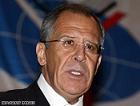 Russia has called for an arms embargo on Georgia as the European Union prepares to meet to discuss possible sanctions against Moscow.
Russian Foreign Minister Sergey Lavrov called for the embargo Monday until Georgian President Mikhail Saakashvili was out of power, and said the West would be making a mistake of "historic scope" if it continued to support Georgia.
Lavrov's comments came on the same day that the EU was set to meet in Brussels, Belgium, to discuss how to respond to Moscow's recent decision to recognize the breakaway Georgia regions Abkhazia and South Ossetia as independent states.
Russia has also not fully withdrawn its troops from Georgia after last month's clashes between the two sides. What do you think about the crisis?
"If the United States and its allies ultimately opt for the Saakashvili regime, which has not taken any lessons from the recent events regarding South Ossetia ... they will make a mistake of an historic scope," the news agency Interfax quoted Lavrov as saying.
Lavrov said Russia would continue taking measures against the Saakashvili administration "to ensure that this regime will never commit evil again." He called for an arms embargo against Georgia.
"First of all it would be correct to impose an embargo on arms supplies to this regime, pending the arrival of new authorities who will turn Georgia into a normal state," he said, according to Interfax.
Georgian troops attacked pro-Russian separatists in South Ossetia on August 7, triggering a Russian invasion of Georgia. Each side offered conflicting figures on how many people died in the fighting.
Taking a cue from the NATO alliance, the 27 European leaders are expected to strongly support Georgia's territorial integrity, to signal that normal relations with Moscow are impossible with Russian troops violating a cease-fire agreement, and to offer more humanitarian, economic and moral support for Georgia, the embattled pro-Western Caucasus state.
EU officials said the bloc's leaders would likely opt for diplomatic pressure to isolate Russia as an unreliable partner and neighbor.
Possible EU actions against Russia include a boycott of the 2014 Winter Olympics in Sochi, holding off on talks for a broader economic partnership with Moscow, adding to the euros 12 million ($18 million) in humanitarian aid to repair Georgia's infrastructure, and contributing to the peace monitoring mission the Organization for Security and Cooperation in Europe operates there.
Russia has remained defiant despite a wave of diplomatic pressure from the West, President Dmitry Medvedev and Prime Minister Vladimir Putin rejecting criticism of the country's recognition of South Ossetia and Abkhazia as independent states.
(Published by CNN News - September 1, 2008)