Scandal
Greek Parliament to investigate land swap
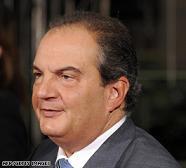 Greek lawmakers voted unanimously early Thursday to launch a parliamentary investigation into a scandal involving a land swap between the state and a 1,000-year-old Orthodox monastery that has deeply embarrassed the conservative government.
Under Greek law, parliament is the only authority competent to decide whether deputies or government officials should face prosecution. The motion was approved unanimously by all five parties in parliament, and an investigative committee will be set up within 45 days to start the probe, parliament speaker Dimitris Sioufas said.
Prime Minister Costas Karamanlis' conservatives, who hold a slim majority of two seats in the 300-seat parliament, have been accused of trying to cover up the scandal, under which the powerful Vatopedi monastery traded low-value land for high-value state property.
A preliminary judicial investigation found that the deals were weighted in favor of the monks, and the cost to the state is believed to have been at least 100 million euros ($136 million). The government canceled the land deals this month and acknowledged they had hurt the public interest.
The issue has already cost the government one minister, who resigned after his wife was accused of acting as a notary in the land deal with Vatopedi, one of the main monasteries in the autonomous Mount Athos monastic community in northern Greece. The minister, George Voulgarakis, insisted nothing illegal had taken place.
The government has been buffeted by a series of corruption allegations and recently saw its popularity ratings dip below the opposition socialists for the first time in eight years. It canceled the land deals this month and acknowledged they had hurt the public interest.
The governing conservatives themselves tabled the motion for a parliamentary probe, which will now look into possible political responsibility for the scandal and could extend to previous governments. The land swaps started after 1999, when the socialist government of the time recognized Vatopedi's claim to land in northern Greece.
But a more crucial vote is set for Friday, when legislators are to decide whether to examine bringing criminal charges against Minister of State and government spokesman Theodoros Roussopoulos, Deputy Foreign Minister Petros Doukas and former Agriculture Minister Evangelos Basiakos, who have been accused of involvement in the scandal.
That motion, from the opposition socialist PASOK party, requires 151 votes to pass.
"People expect to have a government that will make sure the public wealth is not looted," PASOK leader George Papandreou said in parliament. Revelations that government officials, including Roussopoulos, enjoyed a close relationship with the monastery's abbot have further tarnished the government's reputation. Roussopoulos has faced frequent calls for his resignation from both opposition politicians and rebel conservative party deputies.
Roussopoulos angrily denied any wrongdoing.
"Never in (Greek) history have there been calls for a minister to be prosecuted based on the prevailing political climate alone ... Where do the (socialists) base their false arguments against me?" he asked in parliament.
A judicial investigation into the case ran into controversy last week when both prosecutors handling it resigned, claiming that a senior prosecutor stopped them relaying their findings to parliament.
The Supreme Court eventually sent the findings of the investigation to parliament on Wednesday, hours before lawmakers were to debate the motion calling for a parliamentary probe.
Supreme Court prosecutor Giorgos Sanidas ordered four boxes of documents sent to parliament, but insisted there was no indication that ministers or deputy ministers could be held criminally responsible. He ordered prosecutors to continue their investigation.
(Published by AP- October 23, 2008)