More than traffic at stake in Brazil's local vote
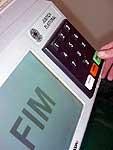 Brazil's presidential election focused on such themes as social inequality and rattled financial markets. In municipal contests two years later, the debate is more mundane but the stakes are still high.
Everyday issues like traffic and trash pickup have supplanted many of the country's grander problems in campaigns for mayor or city council in 5,562 cities across Brazil.
The Oct. 3 vote could be crucial for the 21-month-old government of President Luiz Inacio Lula da Silva, a former factory worker whose leftist roots sent investors scurrying out of Brazil during the 2002 campaign.
Gains for his Workers' Party, or PT, could deliver a crucial vote of confidence, bolster Lula's support in Congress and breathe new life into stagnating reforms on bankruptcy and infrastructure projects, analysts and politicians say.
"If the PT does well, President Lula will have conditions to increase his base of support, especially in the Senate, where things have been more complicated, and the legislative agenda will start again," said Mario Mesquita, chief economist at Dutch bank ABN AMRO in Sao Paulo.
The recent pickup in employment and economic activity is likely to help the urban-based PT make inroads into the smaller cities it has traditionally failed to capture.
If the economy continues to grow at a strong pace, Lula would roll into 2006 with a strong chance at re-election.But a poor showing by the PT could have an inverse result.
"A massive loss by the PT ... would have some impact on some people's perception of the PT and Lula in 2006," said Riordan Roett, director of the Latin American Studies Program at the School of Advanced International Studies at Johns Hopkins University.
"There's a little more riding on the ... municipals this year than there generally is," he added.Because there are so many small elections taking place, it is hard to predict how the PT will fare. But some polls have indicated many of the party's candidates will at least move into a second round run-off Oct. 31.
Christopher Garman, a political analyst at Tendencias consultants in Sao Paulo, believes solid gains by the Workers' Party in new areas could consolidate its transformation from a leftist party to a center-left force more akin to Britain's Labour Party.
They could also appease traditional leftist factions within the PT who have criticized Lula's austere fiscal policies, roiling markets and making it harder for Lula to secure alliances with other parties in Congress to pass his reforms.
A strong showing could "make evident within the ranks of the PT that the choices taken by the current party leadership are bringing electoral dividends," Garman added.In investor's minds at least, Brazil would become a less risky place to put one's money.
But analysts cautioned against overinterpreting the municipal vote and said the Workers' Party could even lose the mayor's seat in Sao Paulo and still do well overall.
In Brazil's largest city, a Datafolha poll published on Sunday showed the incumbent Workers' Party mayor and his main opponent tied, with neither getting the majority needed to avoid a runoff.
"The electoral result is one of the variables people need to pay attention to, just like economic growth," said Monica Valente, vice president of the Workers' Party.
(From Reuters, September 27, 2004)
_____________