Almost prohibition
Stanley Martins Frasão*
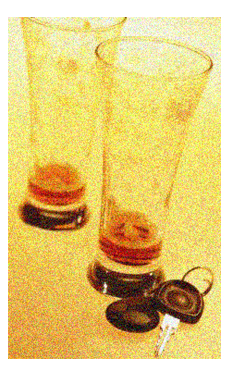 Newspapers and news programs daily announce the decrease in accidents and deaths after the so-called “Dry Law”.
The discussions about the subject continue to generate differences among Brazilians in all social classes, generating partial and general defenders of the law.
Inspection has been carried out, but it is well known that the lack of breathalyzers, particularly in smaller towns.
We know full well that the discussion is far from over, since we are still waiting for Supreme Court to judge whether the law is constitutional or not.
In the same manner, in the National Congress the matter will be debated again.
Congressman Pompeo de Mattos (PDT-RS) is the author of the Bill 3715/08, which alters the Brazilian Motor Vehicle Code, with the objective of modifying the legal limit of alcohol in the blood that constitute a driving offense.
If the Bill is passed, articles 255-B, 276 and 306 of the do Brazilian Motor Vehicle Code will be in effect with the new texts: “Article 255-B. Driving a motor vehicle in public roads with a level higher than 60 mgs of alcohol per 100ml of blood, or under the influence of any other addictive psychoactive substance: Very grave violation; Penalty: Fine; “Article 276. The concentration above 120 mgs of alcohol per liter of blood subjects the driver to the penalties envisaged in article 165 of this Code”. “Article 306. Conducting motor vehicles in public roads with a concentration of alcohol equal or superior to 160 mgs per liter of blood, or under the influence of any other addictive psychoactive substance.”
The Congressman justifies, “the excess severity of the right determines the injustice”. And adds, “the law imposes a very harsh fine to the driver that is caught after a minimum ingestion of alcohol, as well as the suspension of the license and other penal sanctions. A breathalyzer, used around parties or bars will catch innocent and guilty people alike, the fearful drunkards and also the moderate drinkers of the odd afternoon beer. It is not acceptable that with the harshness of the law the national traditions are inverted and all citizens are transformed into teetotalers, consumers of fruit juice and soft drinks.” And he sentences, “the recent decrease in car accidents would not be connected to the rigidity of the new law, but to intense inspection carried out by the authorities soon after it come into effect”.
The Bill will be voted after it is analyzed by the Commission of Transport and by the Commission of Constitution and Justice and Citizenship. Congressman Mauro Lopes (PMDB-MG) was designated the Relater before the Commission of Transport in August 21, 2008.
______________
*
Stanley Martins Frasãois attorney at "Homero Costa Advogados"