Responsible purchasing: what the legal auditor thinks and suggests
Jayme Vita Roso*
I - INTORDUCTION
1. The Non-Governmental Organization Comprar Certo (Buy Right)[1] sent two of its directors involved in an unprecedented social movement to visit this legal auditor in order to request his opinion, pro bono, as to the legal implications of the activity known as responsible purchasing, and to inform them of the consequences that could arise from this engagement given that the movement attracts strong popular appeal. Once the task had been accepted and the contract had been signed - which must always be in writing between the legal auditor and the contracting party - this professional came face to face with an unusual situation. The movement in favor of responsible consumption already exists in France, with two websites that divulge relevant work on this theme. This movement is led by very active women: Elisabeth Laville, one of the most important figures in Europe for corporate social and environmental responsibility, and author of the book The Green Company (Village Mondial edition, 2004), and Marie Balmain, responsible for durable development in the company Pierre & Vacances, having created, in 2004, the movement known as Graines de Changement, an information agency that provides citizens, indiscriminately, with the ways and means of acting so that everyone may seek a better world. The sites that these women employ to divulge their publications and activities, crowning their ideas, are respectively: www.grainesdechangement.com[2] e www.achetonsresponsable.com[3].
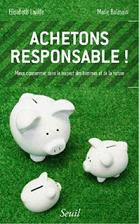 2. Upon researching this novel theme, the legal auditor came across a very recent book (this opinion was written and concluded in the month of November 2006): Achetons responsable: Mieux Consommer dans le Respect des Hommes et de la Nature[4], which had been in European book stores for no more than a month.
2.1. Once the book had been purchased, it fell to the legal auditor to launch into the task of reading it, which he did in three days, breathlessly, given the ease with which the themes and sub-themes could be perused, having, as it did, an informative and concrete style and a formative and didactic subject on how to be inciting.
2.2. Notwithstanding the fact that the purpose of this opinion is not to write a critique on the work in question, relevant aspects that may help the contracting party not to assume social attitudes, with asset-related consequences, need to arise so that they may act as orientation, demonstration and sustenance to his final opinion.
II – WHAT DOES THE BOOK ACHETONS RESPONSABLE PROVIDE US WITH?
1. We must first limit ourselves to the introduction, which also poses a question: “What is responsible consumption”?
Over nineteen pages, the authors examine the many facets of the question, addressing the power of the “consumer” as player; the idea that responsible consumption is expanding and that, therefore, marketing professionals are adapting to the new demands in order to give a new face to the world through caddies, or mediatic and virtual means as provokers of these changes, and, lastly, in order to contribute to collective reflection and to the progress of ethical practice in this area.
Although they do not conceptualize what responsible consumption is, the authors leave enough clues for us to infer that the consumer becomes responsible when he leaves behind his human weaknesses, when he becomes demanding and satisfied after having been convinced that not only did he buy well but that he is also familiar with his chosen products and their effective condition of technical conception and production. Therein resides the strength and the power of the consumer, as far as the authors are concerned.
 2. Moving on to the declention of their hypotheses, which become a guide to daily consumption, the following are addressed: food, or rather how to feed humanity without depleting the planet; jewels, precious jewels, how they are produced and how the extraction of noble minerals and precious stones offends nature; detergents and cleaning products, in truth efficient albeit toxic chemical cocktails; electrical products, the machines and devices that assist in domestic chores, electronic devices, cellular phones (do all they really help us live better?); genetically modified flowers that keep their scent; hygiene and beauty products that shock us when the choice between human beauty and the beauty of the planet is put into question, as well as the sanitary impact of beauty, the well-being market and its inefficiency and bio-piracy; gardening and overused fertilizers and pesticides; children’s toys, with their toxicity and the waste they provoke, the social questions associated with the manufacture and the psychological impact of toys on children; the furniture in people’s homes and offices as worrying elements of the imbalance of the ecosystems; paints and finishings of homes, offices, vehicles etc., the consumption of fish and crustaceans in polluted seas as well as the consumption of genetically modified poultry and, lastly, clothing and its environmental impact.
3. Part II lists all the challenges posed by responsible consumption, at Christmas parties, in the education of children (the art of being a parent in our society of hyper-consumption), beginning a new school year, with new text books and new copy books as well as all the paraphernalia that parents are expected to buy for use (are they really used?) in the class room, in one single school year.
 4. In addition to listing the unusual dramatic practices that coerce the human race of our times into consuming so many useless objects, the authors, at the end of each hypothesis or case, always suggest a way in which we may act correctly. And they round off with a list of reflections and ways of acting that will help us purchase responsibly.
They pose questions that may be used in group meetings at neighborhood assemblies, associations, clubs, schools and other gatherings of people interested in giving for the sake of the collective good.
- Are we right to consider that the purchasing power we have is equivalent to our power to vote for candidates who will construct the world we want?
- Is responsible consumption the luxury of a few or the necessity of us all?
In order to ensure responsible consumption, we must:
a. be informed in order to act;
b. reuse and recycle;
c. think globally and act locally;
d. limit to a minimum the use of everything that is carbon-emitting or electrical;
e. watch what we eat;
f. limit the use of toxic chemical ingredients;
g. support intelligent innovations that improve people’s lives and that of the planet;
h. establish priorities and reflect before making any important purchases;
i. responsible consumption must not make us sad; on the contrary, if we become upset, the future will cease to exist; therefore it is necessary to know how to give up useless purchases as a responsible decision.
iii – PATHS TO TAKE BEFORE MAKING A DECISION
1. Considering the many options of paths that the “Comprar Certo” NGO could go down in the quest for its objectives, constructive meetings, at which the legal auditor was present, were held between the management and prominent members of the entity. Enquired of, in a balanced and sensible manner, not only with respect to which aspects he believed should be defended, but also with respect to his opinion on the responsibilities implicit in the choices, in the campaign costs and in the ways and means of acting, with the purpose of preserving the NGO against probable actions (lawsuits) for actual damages or pain and suffering that could be filed against it by powerful companies involved in Comprar Certo’s demonstrations whose interests could be affected, finally the legal auditor reached his decision: to initiate a generic campaign with a frontal attack not on the companies but on products of a pedagogic nature. The campaign would be committed to society and would place emphasis on the poorest consumers, or those from “classes C and D”.
2. Countless surveys were conducted in a wider universe of people, mainly in the poor outlying neighborhoods of the cities of Recife, Garanhuns, Olinda, Jaboatão de Guararapes and Caruaru. In one survey that posed a multiple-choice question with three possible answers, these being clothing, food or school material, those questioned responded overwhelmingly that, with the new term almost upon them, the new school year required, as it had always done in the past, the purchase of new books, materials and other accessories, in addition to, in some cases, uniforms.
3. Their choice was instant, and it elicited applause for the respondents given the sensibleness of their answers, all the more so because those families with children in state schools, due to an absence of correct policy, year after year are obliged to invest in school material way beyond their limited and exhausted financial means. And this, at a time when the school year is beginning, which coincides with the beginning of the civil year, when purchases made with credit cards in December, as well as the installments of the Land and Urban Tax (IPTU) and the Tax on Automotive Vehicles (IPVA) and insurance payments etc., all fall due.
4. In their work, authors Laville and Balmain, with great clairvoyance, sustain that, with the beginning of the school term, “when consumption rhymes with good decisions”[5], it is the decisive moment when parents should incite their children to learn to speak, discuss and choose products that have a positive impact on the planet. And the classroom is the second place where this should happen, or should be; the place, after the family, where children are taught about the environment. And, bearing in mind that, for those less fortunate French people - amounting to approximately three million families in 2005 - the French government granted, in back-to-school aid, around 263 euros per child (the equivalent of three 2005 minimum wages), and the total spent was, for five million pupils between the ages of six and eighteen, approximately 1.37 billion euros (almost R$ 5,110,000,000.00, in November 2006). It is therefore normal that there should be collective interest on how this money is spent[6].
5. By stimulating families to buy responsibly for the new school period, and to reflect well on doing so, when reasonably restructured, these families will mold the character of their children, informing them about the consumption of goods that depend exclusively on the environment, such as copy books, pens, coloring pencils, erasers, black boards, backpacks, plastic cups, lunch boxes etc.
6. If, better still, they buy paper, copy books, pencils, pencil sharpeners, ballpoint pens, and loose binder paper all made from recycled material, parents will be encouraging their children to exercise this option now, with a view, after some years, to these children doing the same thing with their children.
IV – THE PROCESS IN COURSE: HAVING CHOSEN A CAMPAIGN, NOW THE LEGAL AUDITOR'S SUPERVISION
1. When the community supported the Comprar Certo NGO in its choice of media campaign to be directed at all social strata of the State of Pernambuco, it became apparent that, in the face of a strong appeal to consume correctly, the community and, above all, the parents, together with the teachers and the pupils, provoked, first and foremost, an important reduction in the purchase of non-recyclable products.
2. They went on to make better use of the possessions they had used in the previous year and, consequently, significant savings were had. And, when the parents were consulted, the absolute majority said that the money left over, although meager, was invested in savings accounts to cover any unforeseen eventualities.
3. The legal auditor weighed up all the components of this process, which is essentially social, assessed the results and reached his conclusion, informing that the society of Pernambuco had given a demonstration of very positive collective awareness, since - as seldom happens in other places, be it in Pernambuco or other states - it took on responsibility as a way of building a common future with greater social sobriety.
[1] The name is fictitious and has no bond nor makes any reference to any other entities that may have the same purpose or, furthermore, to any French organizations involved in the disclosure of ideas and attitudes the purpose of which is to render consumers responsible.
[2] Accessed on 28th November 2006.
[3] Accessed on 28th November 2006.
[4] LAVILLE, Elisabeth. BALMAIN, Marie. Achetons responsable: Mieux Consommer dans le Respect des Hommes et de la Nature. Paris: Éditions du Seuil. 2006. 466 p. IBSN 2-02-084707-8. € 19.
[5] Op. cit. p. 425-445.
[6] https://www.education.gouv.br/aides.html#ars. Accessed on 26th November 2006.